New Traffic Rules & Fines in UAE 2026: Overview
The Emirates are drastically tightening road control. Implementing AI radars, adopting zero tolerance for aggressive driving, and completely abolishing «buffer zones» (+20 km/h) on Abu Dhabi highways. We provide comprehensive information on Black Points, rules for passing through Salik and Darb toll gates, as well as new penalties. Ignorance of the law will cost you a minimum of 400 AED.
Critical Violation: Running a Red Light
up to 50,000 AED + impoundment
Amount to release an impounded vehicle (Dubai)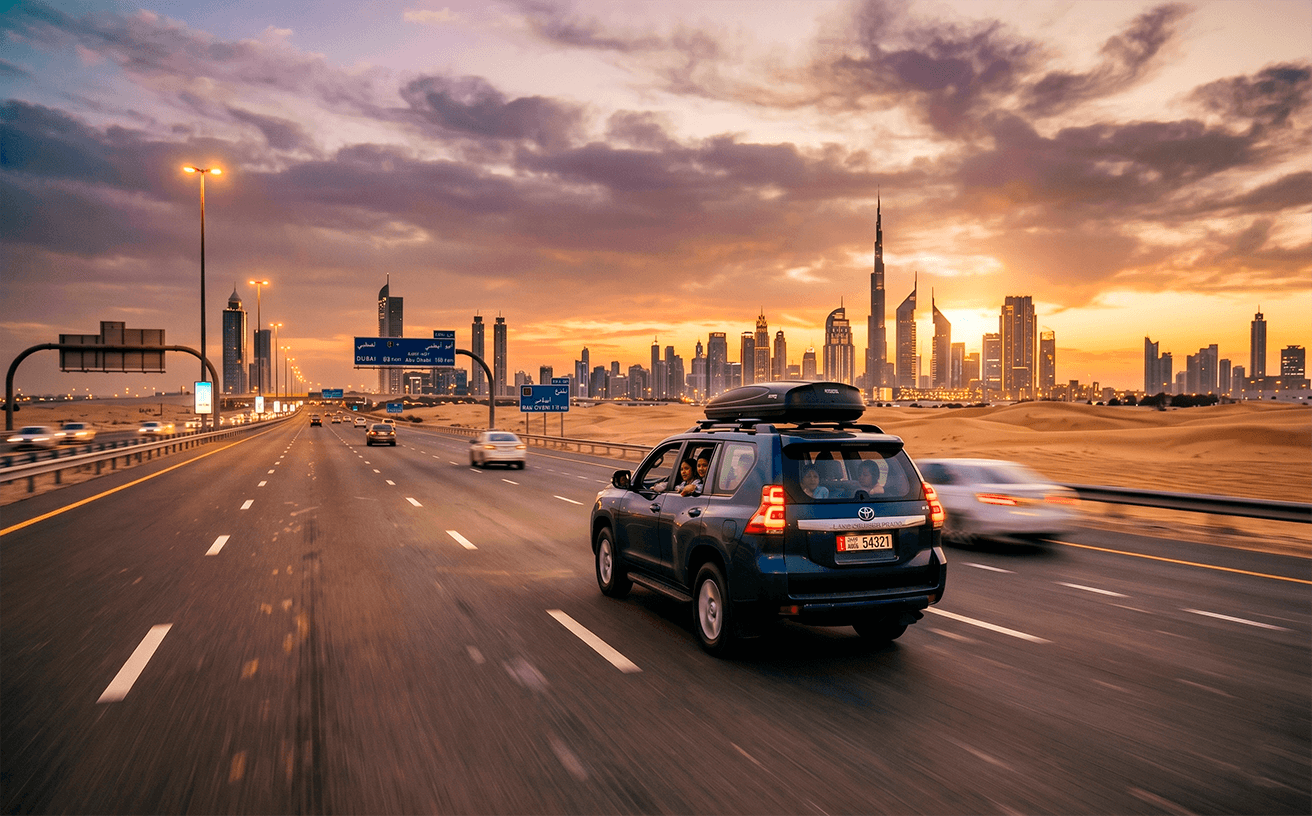
Total Control: Facts and Figures on UAE Roads
Dubai and Abu Dhabi Police utilize advanced AI technologies to ensure zero road fatalities. The traffic penalty system here is designed not to generate revenue, but to enforce strict discipline. Mistakes are costly.
Black Points System
For severe violations (exceeding the speed limit by 60 km/h, aggressive driving), demerit points are issued alongside monetary fines. Accumulating 24 points within a year results in a license suspension ranging from 3 to 12 months.
Zero Tolerance for Alcohol
The legal blood alcohol limit in the UAE is strictly zero. Driving under the influence is penalized with fines determined by the court (up to 25,000 AED), potential imprisonment, a 60-day vehicle impoundment, and subsequent deportation.
Smart Radars and AI Cameras
The new generation of smart cameras detects not only speeding but also mobile phone usage while driving, failure to wear a seatbelt, sudden lane changes without signaling, and tailgating.
Vehicle Impoundment
Participating in illegal racing, running a red light, or attempting to evade the police leads to vehicle confiscation. The cost to release an impounded vehicle in Dubai can reach up to 50,000 AED under the current regulations.
Accidents and the Saeed App
In the event of minor accidents without injuries, drivers are required to move their vehicles off the road to avoid traffic obstruction fines. Accident reporting is processed entirely online through official police applications without dispatching a patrol to the scene.
Toll Gate Violations
Passing through Salik (Dubai) or Darb (Abu Dhabi) toll gates without a registered tag or with insufficient balance incurs fines ranging from 100 to 400 AED for each subsequent violation after the initial grace period.
Survival Code: Road Safety in the UAE
The Emirates is a country with strict laws and challenging weather conditions. Knowing the correct procedures during a traffic accident or sandstorm will save you from astronomical fines and legal issues.
Minor Accident Protocol (No Injuries)
Blocking traffic is strictly prohibited. Creating a traffic jam over a minor scratch will result in fines for both parties.
- Take 3-4 photos of the damage
- Immediately move the car to the shoulder
- Open the Dubai Police / Saeed app
- File an online report (Minor Accident)
Emergency Services & Contacts
Save these numbers. Dubai operates an intelligent dispatch system — help will arrive within minutes.
- 999 — Police (Emergencies)
- 998 — Ambulance Service
- 997 — Civil Defence (Fire)
- 901 — Police Call Center (Non-emergency)
Sandstorms and Fog
During dust storms or dense fog, visibility can drop to zero. The fine for driving without lights is 500 AED.
- Reduce speed to a minimum
- Turn on fog lights
- DO NOT use hazard lights while moving
- Pull off the road if visibility is zero
Cybercrime Laws on the Road
A strict prohibition tourists often miss: filming other people’s cars and posting them online is a criminal offense.
- Taking photos of accident scenes is forbidden
- Fines for posting videos up to 500k AED
- Deportation for filming road altercations
- Photos are strictly for police reports
Important: In case of a severe accident or injuries
Do not touch anything, do not move the vehicles, and call 999 immediately. Dubai Police average a 3-minute response time for major traffic accidents.
Survival Guide: Answers to Key Questions
We have compiled the most frequently asked questions and essential tips for drivers in the Emirates to help you feel confident and avoid legal issues.
Important Advice from Dubai Police
Never photograph or record videos of other people’s vehicles during accidents or road disputes for publication on social media. Under the UAE’s strict cybercrime laws, violating privacy is an offense punishable by fines of up to 500,000 AED and potential imprisonment.
Critical Mistakes: 6 Hidden Traffic Traps
We analyze real-world scenarios where tourists and new residents pay astronomical fines, lose their driving privileges, or face deportation from the UAE.
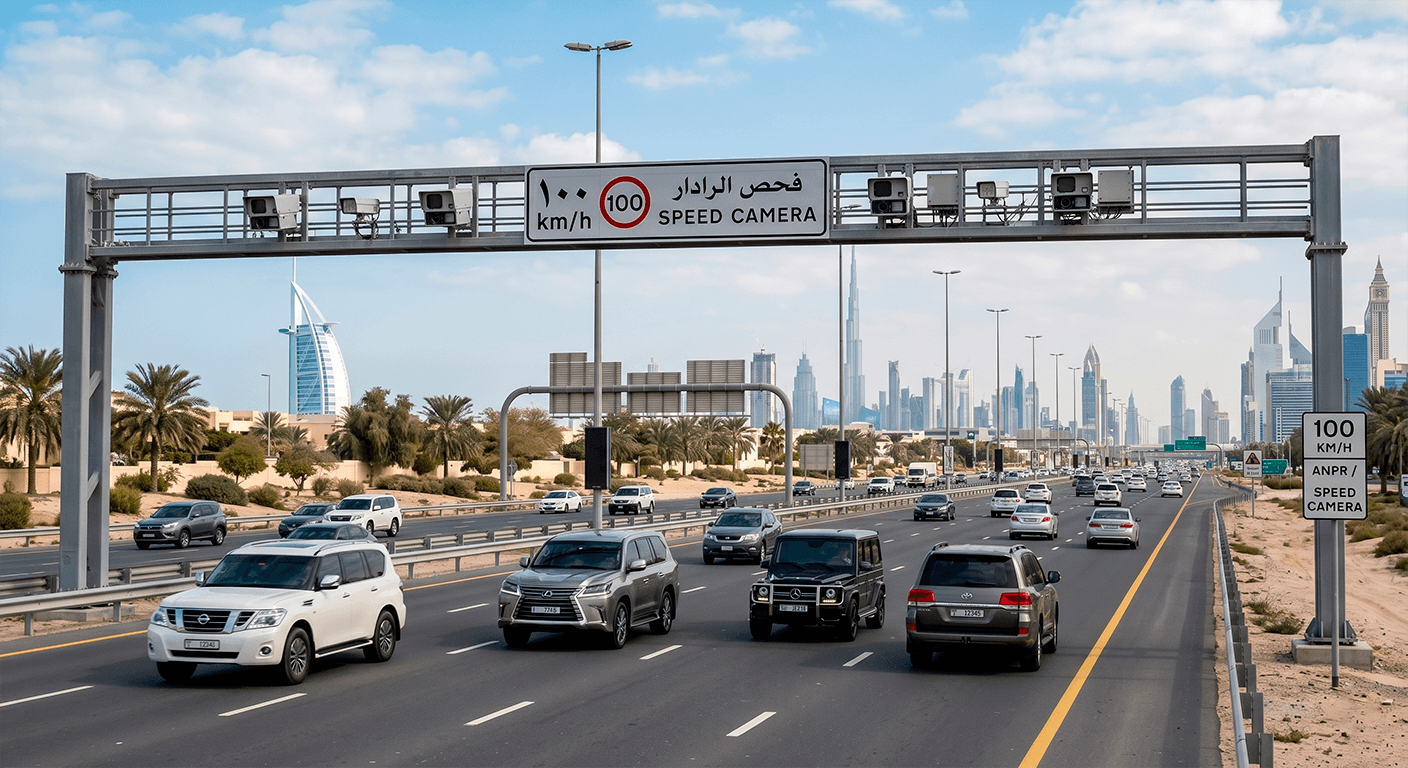
Deposits and Toll Roads
Ignoring the rules for driving through Salik and Darb toll gates in a rental car is a direct path to losing your deposit.
-
Situation: Automatic deduction of tolls and fines from the rental agency’s balance.
-
Consequences: Deposit withheld for up to 30 days and payment of additional administration fees (Knowledge fee).
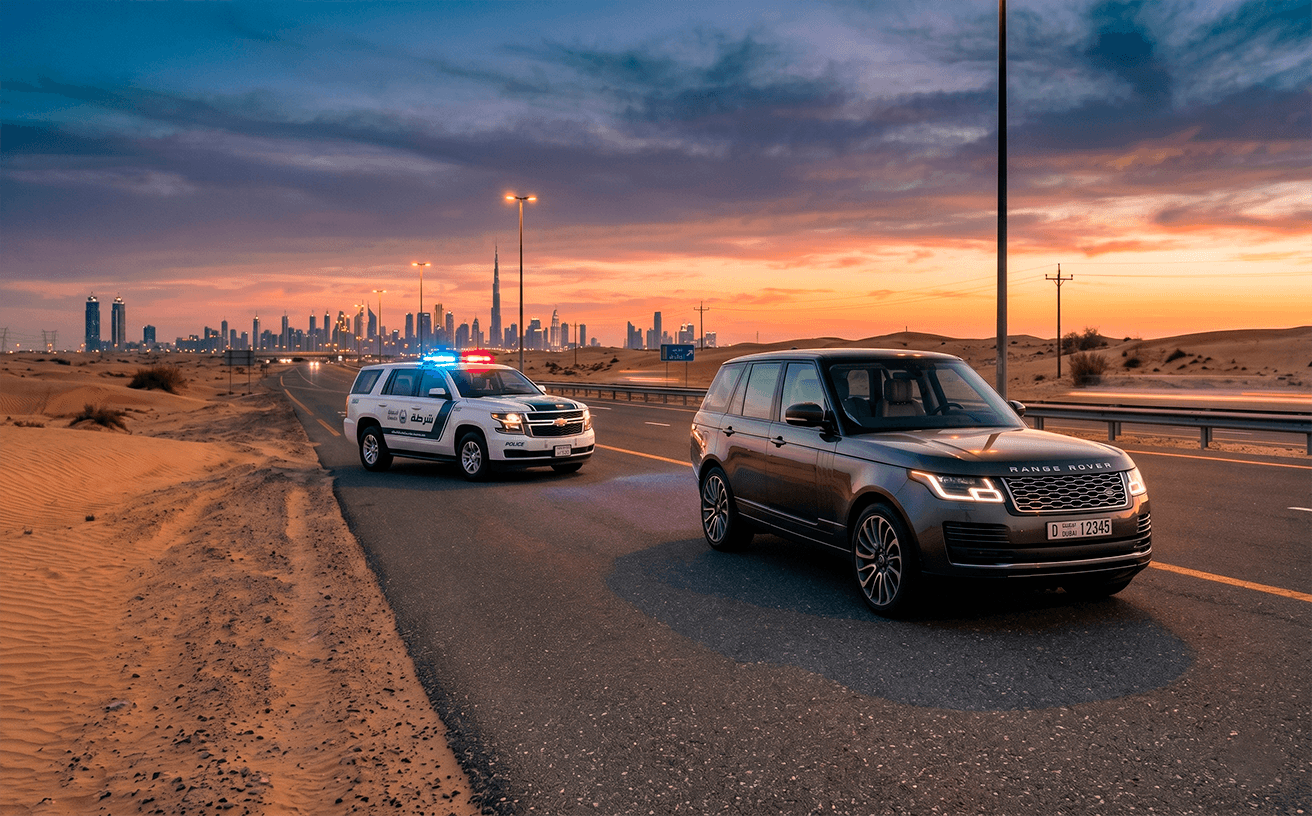
Running a Red Light
Attempting to «rush» through an intersection in Dubai or Abu Dhabi is punished more severely than most other offenses.
-
Situation: Crossing the stop line after the traffic light turns yellow-red.
-
Consequences: Vehicle impoundment, 12 Black Points, and up to a 50,000 AED fee for release.
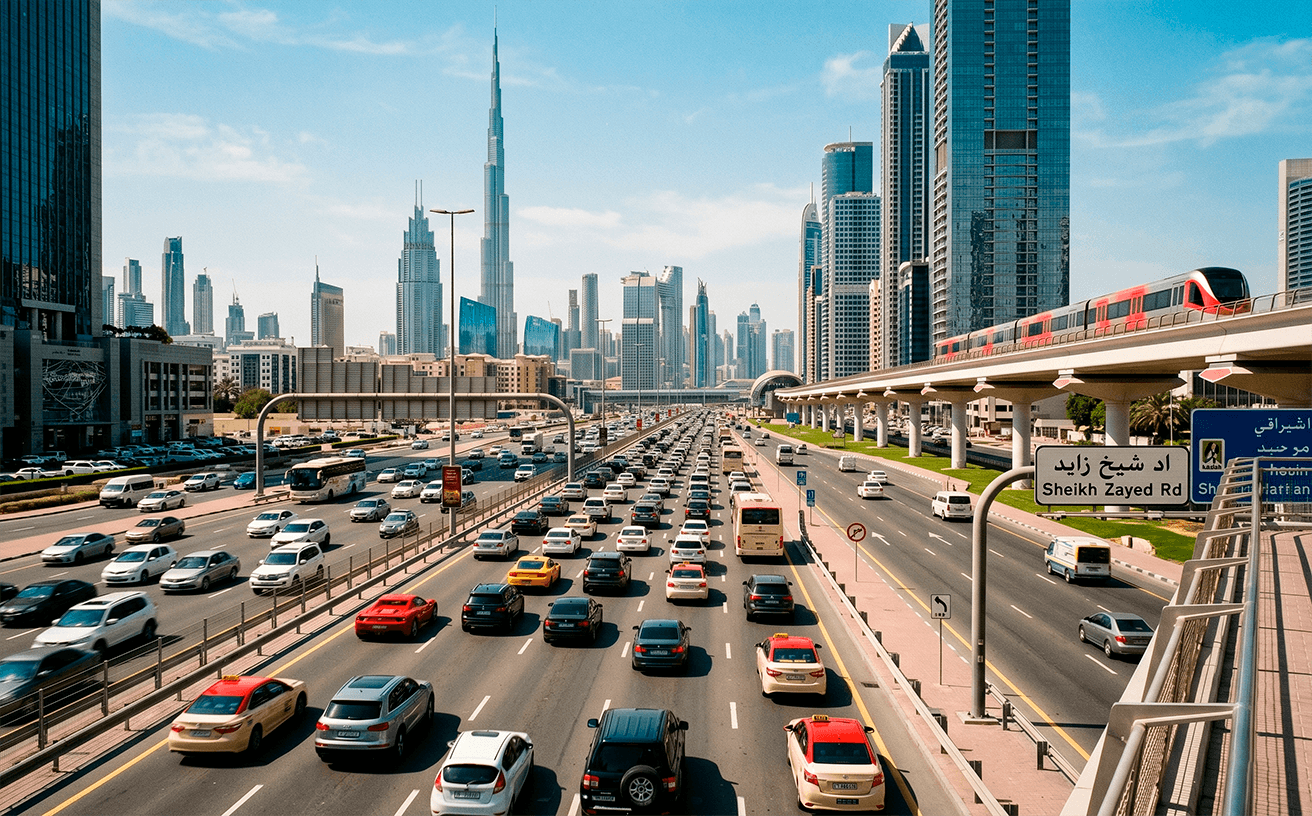
Smartphones and Seatbelts
The new generation of radars tracks activities inside the car cabin through the windshield.
-
Situation: Phone in hand or an unbuckled passenger in the back seat.
-
Consequences: An unavoidable 800 AED fine and 4 Black Points added to your record.
Abolition of the Speed «Buffer Zone»
The habit of driving +20 km/h (the allowed tolerance in Dubai) leads to a chain of fines on Abu Dhabi highways.
-
Situation: Driving at 121 km/h in a designated 120 km/h speed limit zone.
-
Consequences: An instant radar flash. Fines start at 300 AED.
Minor Accidents and Obstruction
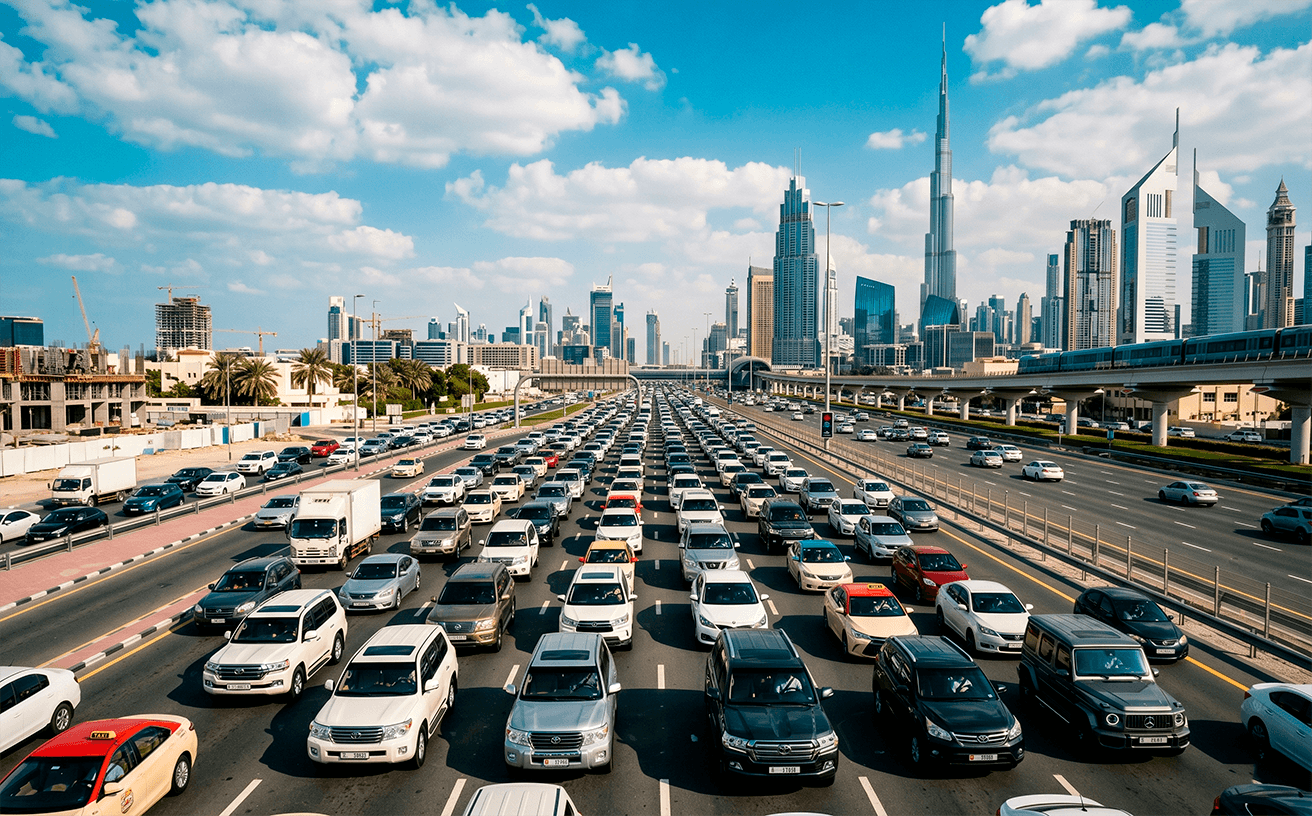
Waiting for a traffic patrol in the middle of the road due to a minor scratch is strictly prohibited by law.
-
Situation: Blocking a lane and refusing to move the vehicle to the shoulder when there are no injuries.
-
Consequences: A 500 AED fine for both parties. Accidents must be reported via the app.
Aggression and Video Recording
Emotions on UAE roads are strictly regulated by cyber security and privacy laws.
-
Situation: Showing offensive gestures or publishing someone else’s car (e.g., an accident) on social media.
-
Consequences: Criminal charges, fines up to 500,000 AED, imprisonment, and deportation.
Official Protocol: If You Are in an Accident
Knowing these steps will save you from additional fines (from 500 AED for blocking traffic) and legal issues. Do not wait for the police on the road for minor accidents.
Assessment and Safety
Turn on your hazard lights. Ensure there are no casualties. If there are injuries, dial 999 immediately and strictly avoid moving the vehicles.
Photographic Evidence
Take 3-4 clear photos of the damage and the license plates. Warning: UAE cybercrime laws strictly prohibit photographing the faces of individuals involved.
Clearing the Roadway
Immediately move the cars to the shoulder. Waiting for a traffic patrol in the driving lane for a minor incident guarantees a fine for obstructing traffic.
App Registration
Open the Dubai Police app (in Dubai) or the Saeed app (in Abu Dhabi). Select «Report Minor Accident,» and upload the photos, driver’s license, and vehicle registration.
Police Report
Within minutes, you will receive an SMS containing the report. A green form indicates you are the victim, red indicates fault, and white means mutual liability.
Contacting Insurance
Forward the electronic report to your rental agency or insurance provider. Garages in the UAE will legally not accept a vehicle for repair without this document.
Control Classification: What UAE Police Monitor
The roads of the Emirates are covered by a dense network of smart cameras and sensors. The police of Dubai and Abu Dhabi divide all violations into several key control zones.
Automated Control (Radars and AI)
Infrastructure and Parking
Severe Violations (Criminal)
Violations Catalog: What You Are Most Likely to Be Fined For
A detailed breakdown of the most common fines on UAE roads. Learn the amounts, the number of penalty points (Black Points), and hidden consequences.
Speeding Violations Cameras / Radars
Speed control in the UAE is absolute. Dubai operates with a +20 km/h buffer zone above the limit, while Abu Dhabi has zero buffer (the radar flashes exactly at the sign’s limit). The fine depends on how much the limit is exceeded.
Fine Schedule:
AI Cabin Cameras Automated Detection
Since 2024, police have widely deployed smart radars capable of «seeing» through windshields. They flawlessly detect unbuckled seatbelts and smartphone usage (even if it’s resting on your lap or you’re checking navigation).
Common Detections:
Toll Roads (Salik / Darb) Infrastructure
The UAE does not use physical toll barriers. Passing under toll gates is recorded via an RFID tag on your windshield. If you buy a car or rent one from a private party and pass a gate without a tag, you have 10 days to register, otherwise daily fines will begin.
Progressive Penalty Scale for Non-Payment:
Severe Violations and Accidents Critical Risk
These violations lead not only to massive financial losses but also to vehicle confiscation (impound lot), suspension of driving licenses, and, in some cases, deportation for expats.
Strict Penalties:
Unwritten Rules: Driving Culture in the UAE
What tourist brochures don’t mention. Road etiquette in Dubai and Abu Dhabi is strictly regulated by smart radars and harsh laws. Mistakes here cost dearly.
Left Lane (Fast Lane)
Highway Specifics
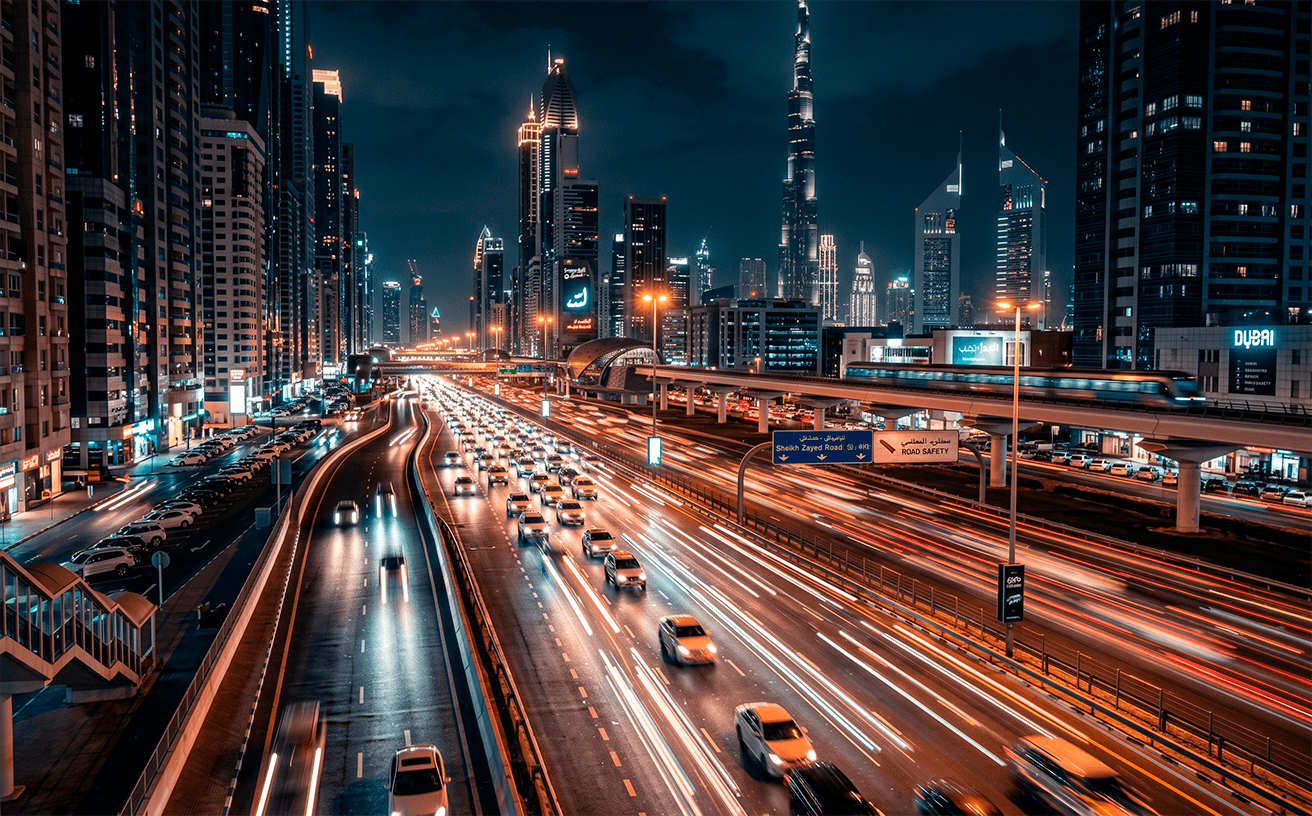
The far-left lane on Sheikh Zayed Road is strictly for overtaking. Cruising at a constant speed in this lane is prohibited by both etiquette and police rules.
- Must yield if flashed
- Fines for stubbornness and blocking
Dangerous Distance
Tailgating Control
Sticking to the rear bumper of the vehicle in front is automatically recorded by smart highway radars. This is a leading cause of severe accidents in the UAE.
- 400 AED Fine
- 4 Black Points Issued
Emotions and Aggression
Criminal Liability
Showing offensive gestures, shouting insults through an open window, or aggressively cutting someone off are treated as criminal offenses under local law.
- Risk of Imprisonment
- Deportation from the UAE
Roundabouts
Roundabout Priority
Priority always belongs to the vehicle already navigating the circle. Entering a roundabout without stopping is classified as creating a dangerous obstruction.
- Mandatory Stopping
- Strict Lane Discipline
Pedestrian Crossings
Absolute Priority
Pedestrians in the UAE have unconditional priority on zebra crossings. Minor deceleration is not accepted; a complete stop of the vehicle is required.
- 500 AED Fine
- 6 Black Points Issued
Flashing Headlights
Light Signal Language
Unlike in many other countries, a high beam flash from behind is not a polite warning, but an urgent demand to vacate the lane. Brake-checking is strictly forbidden.
- Strict Demand to Yield
- Brake-checking is Punished
Hidden Nuances: What’s Not in the Rulebook
The administrative system in the UAE operates differently than in many other countries. Let’s break down the terminology and databases you must know to avoid losing your car and money.
Terminology & Documents
- Traffic File (TC No): Your unique transport profile with the police. Without it, you cannot obtain a license, buy a vehicle, or settle Black Points.
- Mulkiya: The plastic vehicle registration card. It must be renewed strictly once a year after passing the vehicle inspection (testing).
- Salik / Darb Tag: RFID tags for toll roads. The tag is linked to your Traffic File. Driving without a tag incurs a fine of 100-400 AED per gate.
- NOC (No Objection Certificate): Often required from a sponsor (employer) to obtain a driver’s license in certain emirates.
Insurance Pitfalls
- Agency Repair: The most premium comprehensive insurance option. It guarantees that in the event of an accident, your car will be repaired at an official dealership, not a third-party garage.
- 13 Months: Car insurance in the UAE is always issued for 13 months (the extra month serves as a grace period for Mulkiya renewal).
- Color-Coded Reports: Police issue accident reports by color: Pink (you are at fault), Green (you are the victim), White (mutual fault or natural disaster).
- Coverage Refusal: Driving without an International Driving Permit (for tourists), running a red light, or DUI will completely void your insurance coverage.
Databases & Fines
- EVG (Emirates Vehicle Gate): The unified federal database across all emirates. You can use it to check a vehicle’s accident history before purchasing.
- Radar Processing Delays: A fine from Abu Dhabi may appear in the Dubai database with a delay of 3 to 14 days. Don’t celebrate too early if the database is empty the next day.
- Knowledge Fee: An «innovation/knowledge fee» of 10-20 AED is automatically added to every traffic fine in the UAE.
- Fine Discounts: Emirates (especially Abu Dhabi and Sharjah) frequently announce discounts of up to 50% on unpaid fines in honor of National Day (December 2nd).
UAE Transport Matrix: The Power of Neural Networks
The roads of Dubai and Abu Dhabi have transformed into the most highly technological network in the world. Automated systems eliminate human error: neural networks analyze millions of terabytes of data per second, identifying the slightest traffic violations.
-
6th Generation Radars (AI) Hiding is impossible. The new cameras scan the cabin through any window tint, flawlessly detecting a phone in hand or an unbuckled seatbelt at speeds up to 300 km/h.
-
EVG and Traffic File Integration The nation’s unified digital brain. A fine received in Sharjah or Abu Dhabi is instantly linked to your profile and appears in the Dubai app within fractions of a second.
-
Autonomous Patrols and Drones Police utilize autonomous drones to monitor aggressive driving (tailgating), construct 3D models of accidents, and identify traffic jams in real time.
-
Salik 2.0 RFID Gates Invisible toll barriers. Toll road tags are scanned without the need to reduce speed. The system automatically monitors balances and generates fines for non-payment.
Predictive Analysis: Highway Cyber Control
Dubai’s 2026 multi-layered interception network: mobile AI patrols, congestion prediction algorithms, and autonomous mapping drones.
Ghiath Smart Patrol
Police SUVs equipped with 8 360° cameras. The AI scans faces, reads up to 400 license plates per minute while in motion, and instantly identifies wanted vehicles.
Dynamic Speed Limits
During rain or sandstorms, electronic signboards automatically reduce the limit to 80 km/h. Radars sync simultaneously, issuing fines to violators immediately.
Mapping Drones
Upon recording an accident, the system deploys a police quadcopter. It constructs a 3D model of the crash within 2 minutes before the patrol arrives and tracks fleeing vehicles.
Prediction Algorithms
The Traffic File neural network analyzes traffic flows and weather data. The system is capable of predicting a high probability of congestion 15 minutes before it begins.
Global Mobility & International Regulations
Whether you are an expat relocating for business or a tourist planning to rent a vehicle, navigating cross-border driving laws is crucial. Discover how official databases and accredited translation permits protect you on international roads.
Middle East Driving Compliance
Your domestic driver’s license alone is often insufficient abroad. Major rental agencies strictly require a recognized translation before handing over the keys. When visiting or residing in the Emirates, it is highly recommended to secure an International Driving Permit in UAE to comply with strict local police checks and ensure your premium insurance remains valid in case of an incident.
Accreditation & Central Databases
It is absolutely critical to obtain documents only through authorized, IFA-accredited channels. Authentic permits feature a QR code linking foreign traffic officers directly to a unified registry. For residents and tourists in Central Asia, processing documents through the International Drivers Association in Kazakhstan guarantees that your credentials are internationally recognized and legally binding.
Expedited Issuance Process
Preparing for a trip shouldn’t be stressful. The booklet is often paired with a plastic ID Card, making routine verifications significantly faster. You can submit your application entirely online and swiftly receive your Kazakhstan International Driving License, with physical delivery available to specialized Auto-CSCs (АвтоЦОН) in major cities like Almaty, Astana, Shymkent, and Atyrau.
FAQ: UAE Driver’s Knowledge Base
The 20 most frequent questions about traffic rules, fines, radars, and road behavior in Dubai and Abu Dhabi in 2026.